Santa Ynez Valley Vineyard Estate Value: How the Grape Glut Changes It
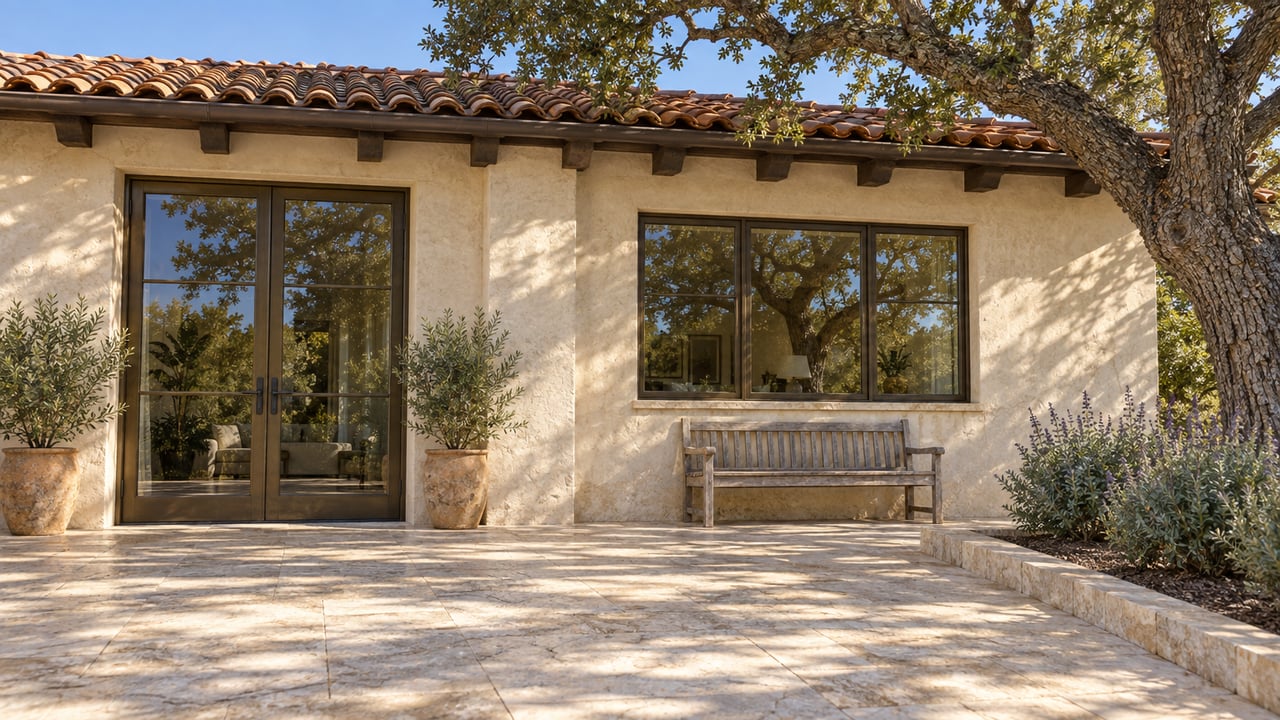
A vineyard estate in Agricultural Preserve land comes with a contract, and the contract transfers to the buyer. Santa Barbara County's guidelines for its Agricultural Preserve program say these Williamson Act contracts "run with the land," so a new owner is bound by both the contract and the county's Uniform Rules. Those rules require that enrolled land be used principally to produce commercial agricultural products. The county most recently amended them on September 1, 2026.
This matters more now because the grape glut has changed what the vines are worth. In its Summer 2026 report, the appraisal team at American AgCredit says lifestyle buyers often see the vines on lifestyle properties "as expensive landscaping and attributing little value to them." On a Santa Ynez Valley estate, planted acres now add value in proportion to how reliably someone will buy the fruit. And if the property sits in an ag preserve, letting the vines go does not let the owner stop farming.
American AgCredit's appraisers estimated Central Coast vineyard values at $10,000 to $100,000 per acre as of May 2026. That range is 20% to 40% below the 2022 peak. Their "Central Coast" segment covers all vineyards in Monterey, San Luis Obispo and Santa Barbara counties. That is why the spread is tenfold. The range tells you very little until you know which end of it a property sits on.
The same report explains what decides that. Top vineyards in premier appellations still draw considerable buyer interest and have held their value relatively well. So have vineyards with strategic appeal to a winery and those that can offer guaranteed income. Vineyards in secondary locations, or with site challenges, aging vines, uncontracted fruit or a weak reputation, are drawing "little to no interest," and their values have fallen further.
| What appraisers say supports vineyard value | What appraisers say drags it down |
|---|---|
| Premier appellation with an established reputation | Secondary location or site challenges |
| Grape contracts or a seller leaseback that guarantees income | Uncontracted fruit |
| Young vines, given today's replanting costs | Vines nearing the end of their productive life |
| Adjacency or strategic appeal to a winery | A poor reputation for the fruit |
The investor side is just as specific. These buyers want properties that come with some form of guaranteed income for at least the next several years, such as solid grape contracts or seller leasebacks. Where a seller cannot offer that, they wait for steeper price declines. Wineries buy rarely right now, because surplus grapes are cheap. They still pay generously for an adjacent vineyard or for a property known for vineyard-designated wines.
So the vines carry real value in a sale only when the seller can document the buyer for their fruit: a contract, a winery that has been buying for years, a lease. Without that paperwork, a buyer may see a farming bill.
Santa Barbara County's 2025 crop report seems to point the other way. Harvested wine-grape acreage fell from 12,126 acres in 2024 to 10,649 in 2025. Total crop value rose from $70.857 million to $87.793 million over the same period.
The key word is harvested. Fruit that nobody bought and nobody picked never enters the total. The California Association of Winegrape Growers' 2025 harvest report included a Central Coast contributor's estimate that 20% to 30% of the regional crop went unharvested. The rising county figure tracks the acres that found buyers. It says much less about the acres that didn't.
Those surviving acres still show which property a buyer wants. Using the county's own 2025 figures, Pinot Noir averaged 3.36 tons per acre at $3,167 per ton, roughly $10,600 in gross revenue per harvested acre. Chardonnay averaged 4.13 tons at $1,884 per ton, roughly $7,800. Those are gross numbers before farming costs, and they apply only to fruit that sold. On a vineyard with a buyer for its fruit, they describe real income. On one without, they describe fruit that may not get picked.
The current vintage has not reset the market. In early impressions published August 21, 2026, Santa Barbara County vintners described the earliest wine-grape harvest anyone could recall. Yields varied a great deal from site to site. Ernst Storm, who makes wine in the Santa Maria Valley and the Sta. Rita Hills, was seeing yields up to 40% below normal and pointed to vine age as a factor. Will Henry of Lumen Wines reported close-to-average yields in the Santa Maria Valley. In the warmer heart of the Santa Ynez Valley, Wynne Sargeant at Brave & Maiden planned her first Sauvignon Blanc pick for August 25, about two weeks ahead of normal.
A light crop usually lifts prices. Turrentine Brokerage's August 21, 2026 update published on Wine Industry Network said Central Coast buyers were cherry-picking for quality, and prices stayed low because the region was not short of any major variety. On September 7, 2026, Terrain's wine analyst called the statewide crop "both the earliest and lightest in decades." He added that a large quantity of uncontracted fruit was still for sale and that many of the choicest vineyards had already been cherry-picked. He considered it a near certainty that less fruit would be left hanging in 2026 than in 2025. With continued vine removals, he expects the grape market to be closer to balance next year.
For estate pricing, that outlook falls short of a recovery. The Summer 2026 report expects more downward pressure on vineyard values in the near term, with recovery likely within a year or two in most regions. It also says the coastal regions have potential for a faster rebound than the San Joaquin Valley.
Here the ag preserve contract stops being fine print. Valley owners have a few ways to respond, and they lead to different places.
The Miller family took the clearest local route. In August 2026 they sold their wine brands to Seattle-based Precept Wine & Spirits but kept Bien Nacido and Solomon Hills in the Santa Maria Valley. According to the Santa Barbara Independent, they have pulled hundreds of vineyard acres at both properties and leased that ground to vegetable, flower and seed growers.
"It used to be a vineyard with a little bit of other crops, and now it's more of a working ranch where the vineyard is a component of that," Nicholas Miller told the Independent.
Replacing vines with another commercial crop keeps the land producing an agricultural commodity for commercial purposes, which is how the county defines agricultural use. Simply leaving land fallow is less clear. The county materials we reviewed contain no blanket allowance for it, and a long fallow sits uneasily with the requirement that the land remain principally in commercial production.
Leaving the program takes time. The process follows a set order:
For a buyer who would rather have the views than the vines, the plan has to work under the contract they inherit. Before an offer, that means confirming whether the parcel is enrolled, how far into any nonrenewal it is, and what other commercial use could replace the vines. Each property's contract and the current rules control the details, and the county or a land-use attorney should confirm them before anyone relies on them.
Recent deals have few public prices. The Summer 2026 report counted 131 active vineyard listings across most of California as of May 2026, with many more offered quietly, and just 19 completed sales so far that year. It blamed the gap between what sellers expect and the steep discounts buyers want. Our research found no 2025 or 2026 Santa Barbara County vineyard sale with a disclosed price.
The best-documented recent Santa Ynez Valley purchase points the same way. On February 13, 2026, Groundstar Vineyard & Estate, founded by Chiara Shannon and Joseph Brent, closed on 247.02 acres of the historic Williams Ranch at 7630 W. Highway 246 in the Sta. Rita Hills corridor. The deal brought its holdings to more than 320 acres. The announcement did not state a purchase price. The announced plans center on regenerative grazing, water systems and native habitat. Noozhawk reported that the land was bought from Rodney Williams, a well-known local rancher. An established operator expanded in the Valley's best-known corridor around a mixed agricultural plan, which fits a market that rewards land with a clear productive use.
It helps, but the appraisers' test is broader. Premier appellations have held up relatively well. Uncontracted fruit, aging vines or site challenges can still put a property in the group drawing little interest.
The appraisers name seller leasebacks and solid grape contracts as forms of guaranteed income that investment buyers now look for. Whether a leaseback suits a particular seller depends on their own plans and should be weighed with their own advisors.
The range reflects May 2026, and our research turned up no newer published appraisal estimate for the Central Coast. Terrain's September 7, 2026 update covered the grape market, not land values, and it expects a grape market closer to balance next year.
If you own a vineyard property in the Valley, the questions above about grape contracts, vine age and your Agricultural Preserve status will shape your price before any buyer walks the rows. If you are buying, the same questions decide what you inherit. Jan Finley and the J Finley Group can review the contracts, farming history and preserve status behind a specific estate with you, discreetly and before the market does. Request a Confidential Consultation.
This article is general information, not legal, tax or financial advice. Consult a qualified professional about your situation.
Stay up to date on the latest real estate trends.
Get assistance in determining current property value, crafting a competitive offer, writing and negotiating a contract, and much more. Contact me today.
Get in touch to learn more.
ADDRESS
Compass
801 Chapala St
Santa Barbara, CA 93101
MAILING ADDRESS
PO Box 311, Santa Ynez, CA 94360