Santa Ynez's Fall Evenings Turn Free After the Sold-Out Vaquero Dinner
Once harvest is in and the tasting rooms quiet down, where does an evening in the Santa Ynez township go? From now until early December, nearly everything goes through two buildings: the Santa Ynez Valley Historical Museum & Parks-Janeway Carriage House on Sagunto Street and the Santa Ynez Chumash Museum and Cultural Center at 3500 Numancia Street.
Three evenings carry the season. Only the first one needed a ticket, and those are gone.
The Historical Museum put Vaquero seats on sale at $225 per person, or $1,600 for a table of eight, through September 30. After October 1 the price rose to $275 a seat and $2,000 a table. The museum's event page now marks the dinner sold out.
This year's Vaqueros of the Year are Denis Carroll and Don Hanson. The Santa Ynez Valley News describes Carroll as a former owner of HatCo, the company behind the Stetson and Resistol hat brands, and the founder of Pro Equine Group. Hanson has spent more than seven decades in Western cattle and ranching across Colorado, Hawaii, California and Wyoming. The paper says both men are being honored for their service to Western and ranching communities.
Speaking to the same paper about the early sellout, museum board president Tina McEnroe said:
"Hold on to your hats!"
Choosing a hat-industry figure and a lifelong cattleman fits the setting. The dinner takes place among the museum's own collection, and that collection tells the Valley's ranching story. The Parks-Janeway Carriage House holds more than 36 horse-drawn vehicles, including wagons, carts and stagecoaches, along with saddlery, tack and period clothing. Its holdings come from named collections that include John J. Mitchell, Los Adobes de los Rancheros, Janeway-Bixby and the Parks family. The permanent exhibit "Queen of the Cattle Trail" centers on an 1870 chuck wagon shown beside wagons dating to 1850. "Tales from Mattei's Tavern" tells the story of Felix Mattei and includes the reinstalled Mattei's Sidebar Buggy.
The dinner's seats are spoken for. The collection is the part of the evening that stays open on ordinary days.
On Thursday, November 12, the Santa Ynez Chumash Museum and Cultural Center hosts its monthly Second Thursday program after its normal closing time. The museum's posted public hours run Thursday through Sunday, 10 a.m. to 5 p.m., and its listed general admission is $15 for adults. Second Thursday starts at 5 p.m., costs nothing and needs no reservation. The Santa Ynez Valley Foundation's listing adds that the permanent and temporary exhibits and the Cultural Park are open free during the event.
The series has run every month since summer, and each speaker has come from a different field:
November's guest is Raymond Ventura Sr., a Santa Ynez Chumash community member and a multidisciplinary artist. He is the grandson of former spiritual leader Adelina Alva Padilla and holds a studio art degree from California State University, Los Angeles. He works full time as a ceramicist and brings Chumash culture into each piece. He also makes custom jewelry, paints Chumash-inspired works and practices flintknapping. The museum says his commitment to teaching and learning has recently drawn him to traditional Chumash basketry.
The evening follows a set schedule. Guests arrive from 5:00 to 5:30, the lecture and Q&A run from 5:30 to 6:30, and a reception follows until 8:00. If you arrive closer to 5:00, you will have time in the galleries before the talk.
The Chumash Museum opened to the public on May 15, 2025. The Santa Barbara Independent called the opening the culmination of a five-decade tribal dream. The firm Jones & Jones designed the complex. Its three main buildings take their form from traditional Chumash 'ap dwellings, and George Rivera's sculpture "Keeping Our Culture Alive" marks the entrance. The museum credits architect Johnpaul Jones and says the main structures face west, a reference to the "guardians of the west gate."
Inside, the permanent galleries follow a route themed around water and use interactive media. The Independent reported a collection of 24,000 historically significant items. Noozhawk's opening coverage described exhibits on regional Chumash sites, basketry, tomol canoes and tribal military service, with the Samala language shown alongside English.
Outside, the 3.5-acre Cultural Park works as an outdoor living museum, with an amphitheater, a living village and gardens of traditional-use plants. The Tomol House holds Muptami, a redwood plank canoe built in 2009. The Maria Solares Discovery Center serves as the classroom, and the Heritage House is a gathering space. The museum lists "A Celebration of Our Ancestral Homelands," which includes "We Are Samala," as its temporary exhibit, and "Discover the Chumash Legacy" as its permanent one. The posted hours and admission prices come from a page published in 2025, so check them before a daytime visit. Parking on site is free.
The Carriage House covers the Valley's stagecoach and chuck-wagon era. On Numancia Street, the galleries tell the far longer story that came before it, in Samala as well as English. A single November week puts an evening at each.
The last of the three evenings returns to where the season began. The Santa Ynez Valley Foundation lists Santa Ynez Country Christmas for Thursday, December 3, 2026, from 4 to 6 p.m. It is a free community event with children's activities, Santa, holiday music, dance performances and treats. The Foundation notes that Santa Ynez is the first town in the Valley to light its tree each season.
The Solvang Chamber of Commerce listing places the event at the Historical Museum, 3596 Sagunto Street. It lists carriage rides from 2:30 to 4:30 p.m. and performances by the Alan Satchwell Trio, the Santa Ynez Valley Jazz Band and Fossemalle Studio Dancers. The Chamber's page gives the date as December 4. The Foundation's December 3 falls on the Thursday both listings name, so it is the date to plan around. Check with the organizers as the day gets closer.
Carriage rides in front of a building full of carriages fit this town well. If you arrive for the 2:30 rides, you will have time to see the Carriage House collection or the Ellen Gleason Memorial Library before the tree is lit. The library focuses on local and California history and holds nearly 1,000 books, plus maps, legal papers, oral histories, newspapers and photographs. The museum's newest exhibit, "Dogs: Our Pawtners in Settling California's Central Coast," opened on January 31. Ask at the door whether it is still on view.
The Historical Museum hosts both of the township's biggest evenings, less than four weeks apart. The Chumash Museum hosts the free monthly evening between them. Only the Vaquero Dinner charges admission, and its seats are already gone.
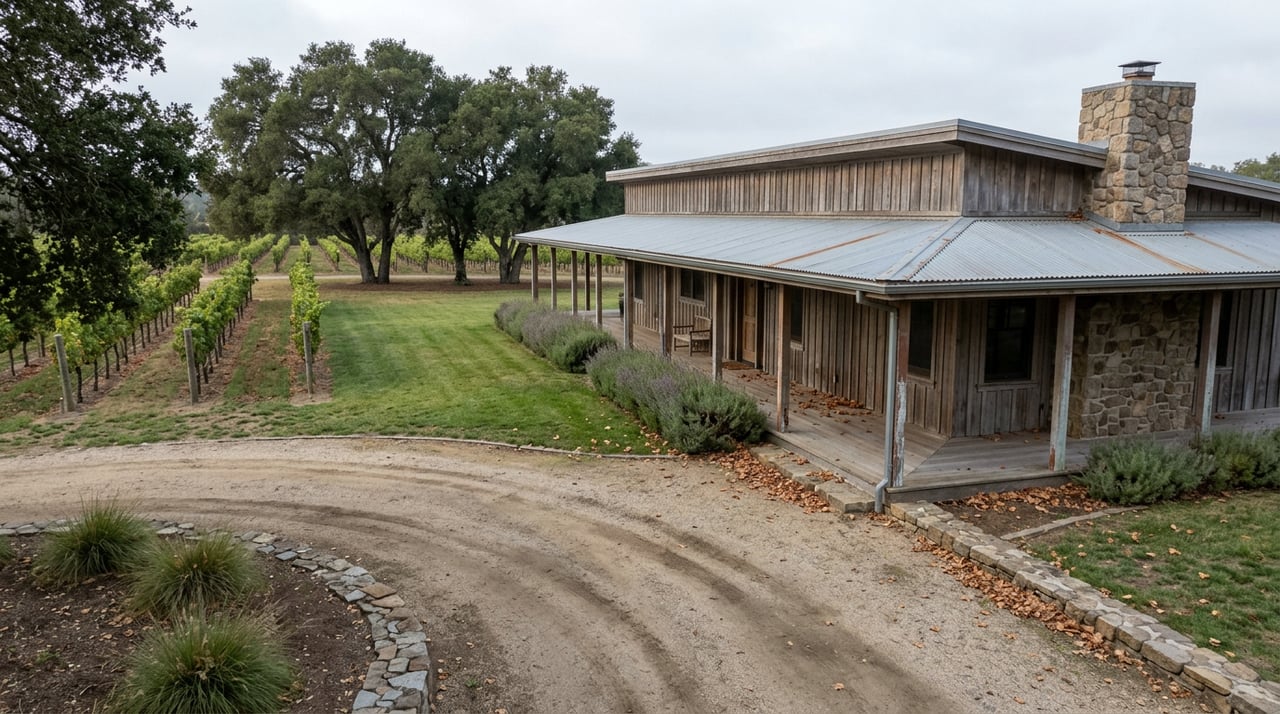
At Jan Finley, we know these museums tell the story of the Valley's ranching and Chumash history, and that same history shows up on the land itself. If you own a Valley ranch, carriage barn or historic acreage and want to understand what it is worth, or how to present its history to the right buyer, we would be glad to talk. Request a Confidential Consultation.
Stay up to date on the latest real estate trends.
Get assistance in determining current property value, crafting a competitive offer, writing and negotiating a contract, and much more. Contact me today.
Get in touch to learn more.
ADDRESS
Compass
801 Chapala St
Santa Barbara, CA 93101
MAILING ADDRESS
PO Box 311, Santa Ynez, CA 94360