State Street Just Settled Its Six-Year Fight. The Storefronts Didn't Wait.
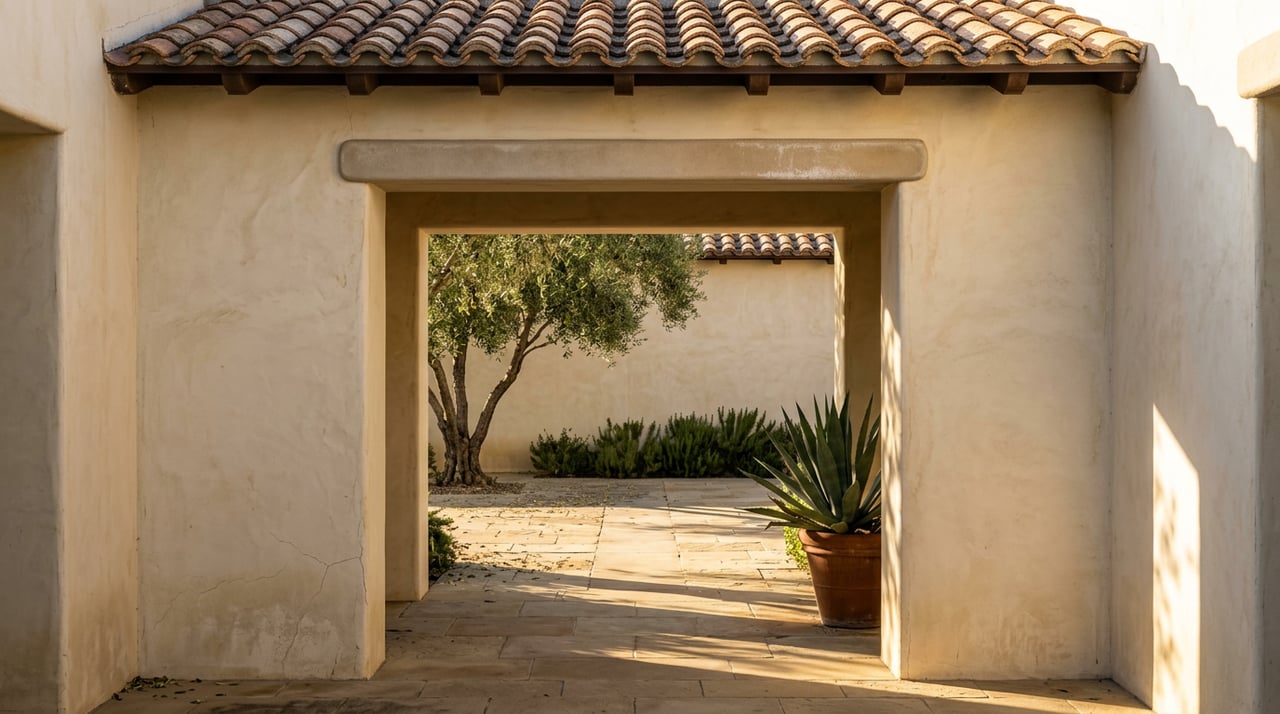
Walk down State Street on any weeknight this month and you'll pass Milio's Pizza sliding fresh sourdough slices into a case, Sweetaly Gelato scooping ferrero rocher and salted caramel two doors down, and a line forming outside Beau, the 1920s-style bar that took over the old Crush Bar space in March. None of that required a permit from City Hall's six-year argument about whether cars belong on this street. The businesses moved in while the argument was still going.
That's the part of this story most people miss. On September 1, the Santa Barbara City Council voted 6-1 to adopt the Final State Street Master Plan, and on September 15 that adoption became official, closing a fight that started the week the world shut down in 2020. But if you've lived here through any of it, you already know the vote didn't create the street you're walking on right now. It just wrote down, in a $96 million planning document, what had already happened between the empty storefronts.
The plan the council approved covers the 400 through 1300 blocks of State Street, the paseos, the plazas, and the parking structures around them. It also quietly amended Title 31, the pandemic-era emergency order that had made the street's car-free configuration temporary. That amendment removed the December 31, 2026 sunset clause. Without it, the legal basis for the current setup would have expired the moment the Master Plan was adopted, leaving the city without a framework for the street it just spent five years designing.
The physical plan itself is not a ban on cars, whatever the yard signs at the last few council meetings suggested. Consultant Stefanos Polyzoides, who worked on the plan with State Street Master Planner Tess Harris, described a corridor with two 30-foot sidewalks flanking a 20-foot central travel lane, built around retractable bollards that preserve access for emergency vehicles and service deliveries. Construction is expected to start within 18 months and take roughly six years to finish, which puts a realistic completion date somewhere around 2032.
Harris, presenting the final version to council, put the stakes in a way that stuck with a lot of people in the room: there's a whole generation of Santa Barbara kids who, if the city acts now, will grow up on this street and never know it any other way.
If you've followed the debate even loosely, you've heard both of these thrown around like they contradict each other. They don't, once you know what each one is actually counting.
The first number comes from a Radius Commercial Real Estate report cited in council testimony this summer: vacancy along the historic 400-1300 block stretch of State Street peaked at 48 available storefronts in the fourth quarter of 2020, and by the first quarter of 2026 had come back down to roughly 30, which lands close to mid-2019 levels, before the pandemic and before the closure.
The second number, cited by a different set of advocates, comes from a separate Radius report tracking Santa Barbara's overall retail market: a citywide vacancy rate that climbed to 3.8 percent in the third quarter of 2025, a two-year high, with leasing activity described as slow and only 11 new leases signed that quarter across roughly 17,000 square feet.
Both numbers are accurate. They're just measuring different things. One is counting physical storefronts on the specific promenade blocks people actually argue about. The other is a broader retail-market snapshot that includes shopping centers, strip retail, and commercial space well outside the paseo, where a Rite Aid bankruptcy and a handful of big-box departures were doing most of the damage. Anyone quoting one figure to refute the other is comparing two different maps of the same city and calling it a contradiction.
Here's where the story gets more interesting than either vacancy stat, because it's not abstract. These are the specific storefronts that changed hands while the political fight was still unresolved.
| Business | Location | What it replaced |
|---|---|---|
| Milio's Pizza | 801 State Street | Vacant nearly seven years, since the Hoffmann Brat Haus closed in 2019 |
| Sweetaly Gelato | Paseo Nuevo | Tondi Gelato |
| Beau | State Street | Crush Bar and Armada Wine |
| Manifattura | 413 State Street | New Italian concept in a previously underused block |
| Aegean | De la Guerra Plaza | New Eastern Mediterranean concept from chef Efe Onoglu |
| SBIFF Film Center | 916 State Street | New five-theater complex for the Santa Barbara International Film Festival |
| Silvergreens | 1001 State Street | Returning after a 25-year run in Isla Vista, in partnership with Amazon |
A few of these matter more than their square footage suggests. The corner at 801 State sat empty long enough that the city floated turning it into condos or a boutique hotel before Milio's took the lease. The Music Academy of the West is separately converting a vacant State Street building into a year-round performance and education space, and UC Santa Barbara is moving forward on an Innovation Center at 410 State. None of those tenants signed a lease because the council finally settled the vehicle question. They signed because the foot traffic, tourist and local both, was already there to bet on.
This is the actual thesis worth sitting with if you live here: State Street's recovery was never waiting on City Hall. The people who run restaurants and galleries and coffee shops made their leasing decisions during the exact years when nobody could tell you with confidence whether cars were coming back. Robin Elander, who runs the Downtown Santa Barbara Improvement Association and has pushed to reintroduce vehicles, and Sullivan Israel, who founded Strong Towns Santa Barbara and pushed the opposite direction, spent years disagreeing about the street's future in council chambers. Meanwhile Sweetaly's owner was looking at Paseo Nuevo and deciding the European-feeling architecture reminded him enough of home to open there anyway. Milio's founders were scouting State Street specifically because one of them had already been catering weddings and events across Santa Barbara and Montecito and had a read on where people actually gather.
That's a different story than the one that gets repeated at every council meeting, where the argument is framed as cars versus no cars, decline versus revival. The businesses that opened this year weren't betting on a policy outcome. They were betting on the street as it already existed, six lanes of pedestrians and bicycles and outdoor tables that had been there long enough to stop feeling temporary.
The vote on September 1 didn't create that confidence. It ratified it, put a legal foundation under it, and gave the next six years of construction a document to build toward. If you want to know what State Street will look like in 2032, the retractable bollards and the 30-foot sidewalks are a reasonable guess. If you want to know why it feels different walking down it right now, the answer is sitting in the storefronts that filled in while everyone was still arguing about whether they would.
For deeper background on the plan itself, the City of Santa Barbara has posted the full Master Plan and its appendices at statestreet.santabarbaraca.gov, including the council agenda materials from the September 1 hearing.
Santa Barbara keeps rewriting itself block by block, and the people who understand that rhythm best are usually the ones who've walked it the longest. If you're weighing a move into the South Coast market, or wondering what a specific property here is actually worth in a corridor this much in motion, Jan Finley offers the kind of grounded, founder-led read this market rewards. Request a Confidential Consultation to talk through what you're seeing.
Stay up to date on the latest real estate trends.
Get assistance in determining current property value, crafting a competitive offer, writing and negotiating a contract, and much more. Contact me today.
Get in touch to learn more.
ADDRESS
Compass
801 Chapala St
Santa Barbara, CA 93101
MAILING ADDRESS
PO Box 311, Santa Ynez, CA 94360