Carpinteria Equestrian Property Basics Near the Polo Fields
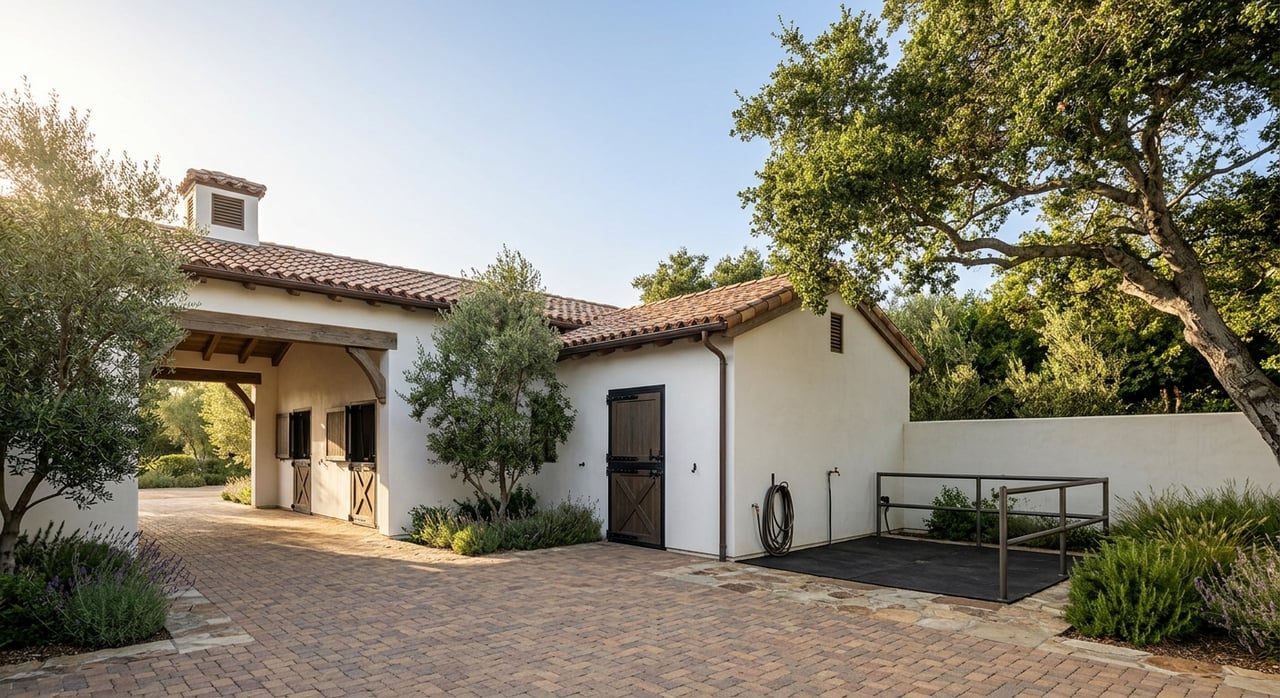
If you picture horse property in Carpinteria as a simple beach-town home search, you may miss what makes this niche so unique. Near the polo fields, the market is shaped by working stables, permit rules, county-versus-city boundaries, and the practical needs of daily horse care. If you are searching for the right fit, this guide will help you understand where to look, what to compare, and how to think about equestrian living near the Santa Barbara Polo & Racquet Club. Let’s dive in.
Carpinteria’s equestrian identity is closely tied to the Santa Barbara Polo & Racquet Club in the Foothill and Via Real area near Highway 101. The club is more than an event venue. It operates as an active horse facility with annual and monthly stalls, tack rooms, hay space, a track, and barn rules that shape how horses move through the property.
That matters when you search nearby homes. In many markets, “equestrian property” can mean almost any house with room for a barn. In Carpinteria, the polo corridor creates a more defined horse-oriented environment, with a clear connection between housing, stabling, training, and seasonal polo activity.
The club also hosts public polo matches on Friday and Sunday afternoons from mid-April through October. For some buyers, that creates a strong lifestyle draw. For others, it is a reminder that proximity to the fields should be evaluated not just for prestige, but for function, access, and how you plan to use the property.
The most visible equestrian cluster sits around the polo corridor itself. This area appeals to buyers who want to stay close to stabling, horse activity, and the social energy that comes with the polo season.
Properties here may offer convenience to the club, but that does not always mean they are fully self-contained horse properties. Some buyers in this area prioritize quick access to boarding and training over maintaining private stalls, arenas, or turnout on-site.
A broader horse-property search often extends beyond the city core into unincorporated areas. Santa Barbara County identifies Summerland and Toro Canyon as adjacent planning areas, and Toro Canyon forms part of the western Carpinteria Valley between the Santa Ynez Mountains and the Santa Barbara Channel.
In practical terms, that county-side edge is often where more functional equestrian parcels appear. If you need more land, more flexibility, or room for horse infrastructure, these areas may offer a better fit than smaller in-town lots.
Not every equestrian buyer needs a full horse setup at home. In and around Carpinteria, some properties work well because they pair residential living with access to nearby boarding and training facilities.
That can be a smart option if you want a coastal home base without taking on the upkeep of stalls, arenas, feed storage, manure management, and trailer circulation at your residence. It can also widen your search if inventory for true horse properties is limited.
If a property sits inside the City of Carpinteria, horse keeping is permit-driven. The city’s animal-keeping permit application states that livestock, including horses, require a permit.
The same city rules say equine animals are prohibited on lots of 10,000 square feet or less. On larger lots, the limit is one equine per lot, and the code requires a lawful barn, stable, pen, or other structure that meets city standards.
Setbacks matter too. The city requires barns and stables for equines to be kept 300 feet from nearby residences and other human-occupied buildings. The permit process also involves investigation, annual inspections, fees, and review related to nuisance or health concerns.
For buyers, the takeaway is simple. A city address does not automatically mean horse use will be practical. Before you fall in love with a property, you need to confirm what is legally allowed and whether the site can support it.
Many of the more practical equestrian searches near Carpinteria shift into unincorporated Santa Barbara County. The county maintains land use and zoning maps for unincorporated areas, and parcel-specific review becomes especially important where barns, arenas, grading, or other site work are involved.
That does not mean every county parcel is ready for horses. It means the framework is often more aligned with larger rural properties than what you typically find on compact city lots.
This is especially important if you want more than a simple barn. A riding ring, turnout area, track, trailer access, wash area, and hay storage can quickly turn a scenic parcel into a more complex land-use question.
In this niche, the right amenities often matter more than square footage inside the home. Existing stalls, tack rooms, barns, wash areas, and turnout systems can make a major difference in both convenience and cost.
If a property already supports horse use, you should still verify the permit history and layout. A barn on-site is helpful, but it is even more valuable when it fits the parcel well and aligns with current local requirements.
For active riders, the training setup is often a deciding factor. Buyers should look closely at arena or schooling-ring size, footing, lighting, and whether the property already includes a round pen, track, or turnout system.
Near the polo fields, those details matter because the local horse culture is not one-size-fits-all. Some buyers are focused on polo access, while others may be comparing hunter/jumper, equitation, or general recreational riding needs.
Carpinteria also has nearby private facilities that can shape your decision. Windfall Stables on Casitas Pass Road describes a 15-acre avocado orchard setting with boarding and hunter, jumper, and equitation training.
Santa Barbara Stables says its Hilltop Ranch property includes a large riding setting with multiple rings, a polo field, wash racks, private trails, and daily grass turnout. For buyers, this means you can compare owning a full horse property against owning a home that relies on nearby professional facilities.
Trail access is one of the strongest practical advantages in the Carpinteria equestrian market. This is not just a scenic talking point. It can directly shape how often and how easily you ride.
The Franklin Trail runs from the Carpinteria Valley floor up Franklin Canyon to Los Padres National Forest and is used by equestrians, hikers, and mountain bikers. Santa Barbara County also identifies the Arroyo Quemado Trail at Baron Ranch as public access for hikers, non-motorized bicyclists, and equestrians.
If trail access matters to you, ask a more precise question than “Is there a trail nearby?” You will want to understand whether access is direct from the parcel, tied to a legal easement, or simply an off-site amenity within easy hauling distance.
Most buyers looking for equestrian property near the polo fields end up comparing one of three models.
This option is best for buyers who want to stay close to the Santa Barbara Polo & Racquet Club and value access to stabling, events, and the rhythm of the polo season. The tradeoff may be less land or less private horse infrastructure on-site.
This path often points buyers toward Toro Canyon, Summerland, or other county-side parcels near the Carpinteria Valley. These properties may better support barns, arenas, trailer access, and a more complete horse setup.
Some buyers decide that the best solution is a smaller coastal residence paired with boarding at a nearby stable or the polo club. That can work especially well if your priority is lifestyle balance rather than daily management of a horse facility at home.
If you are narrowing options, keep your due diligence focused on the features that truly shape equestrian use.
A beautiful property may still be the wrong equestrian fit if these fundamentals do not line up. In this market, usability often matters just as much as location.
Carpinteria is not a uniform horse market. Coastal homes, polo-adjacent properties, and county-side equestrian parcels each come with different tradeoffs in land use, access, infrastructure, and day-to-day function.
That is why a tailored search matters. You are not just buying a home. You are choosing a property that needs to work for your horses, your riding goals, and your long-term lifestyle in Santa Barbara County.
If you are considering a purchase or preparing to position an equestrian property for sale near the polo fields, working with a local, founder-led advisor can help you cut through the noise and focus on what truly fits. To start a private conversation, connect with Jan Finley.
Stay up to date on the latest real estate trends.
Get assistance in determining current property value, crafting a competitive offer, writing and negotiating a contract, and much more. Contact me today.
Get in touch to learn more.
ADDRESS
Compass
801 Chapala St
Santa Barbara, CA 93101
MAILING ADDRESS
PO Box 311, Santa Ynez, CA 94360